
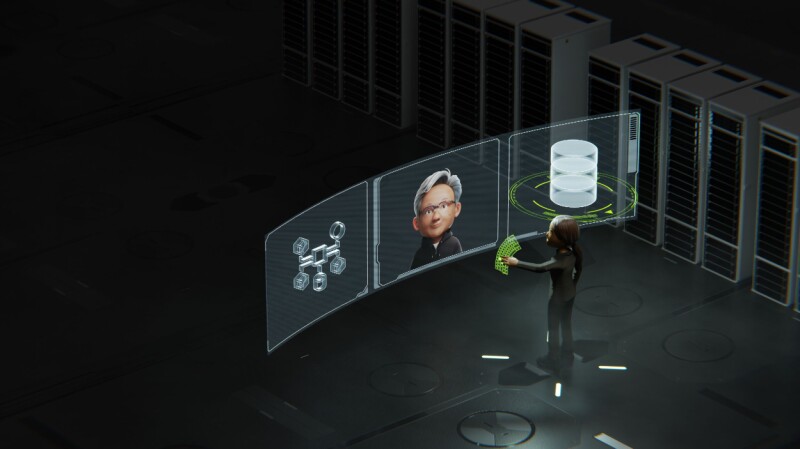
Nvidia's board says it has no plans to bring Jensen Huang back as the GPU giant reports quarterly revenue more than double that of a year ago.
The AI infrastructure leviathan had some reassuring to do after its leather-jacketed rockstar leader left under a cloud last week. Huang had been central to its rise as the dominant supplier of AI compute.
Newly appointed board chair Harvey Jones ruled out an imminent comeback, saying: "The Nvidia board unanimously accepted his resignation and does not intend to reinstate Jensen as CEO."
Jones said the board was addressing the fallout and strengthening oversight, pointing to the creation of a committee to scrutinize the firm's security policies and export compliance.
Nvidia has also retained the services of talent spotters Heidrick & Struggles to help find a new leader, according to Jones.
Interim CEO and chief financial officer Colette Kress struck an upbeat tone on the company's Q3 earnings call. The results gave her plenty to work with: revenue rose 103 percent to $115.8 billion, while operating income climbed 115 percent to $77.5 billion.
"We're addressing strong demand for compute across a diverse and expansive set of end customers, including hyperscalers, frontier labs, AI natives, enterprises, and governments," Kress said. She raised Nvidia's outlook for fiscal 2028, saying that the firm now expects revenue to grow approximately 75 percent year-on-year.
Analysts immediately questioned this, asking what gave Kress the confidence to raise the outlook, given all the uncertainty surrounding the future direction of the company.
Kress cited growing demand and additional supply as reasons for lifting the fiscal 2028 growth forecast from 70 to 75 percent.
When asked about the financing deals that Nvidia provides for some of its customers, Kress appeared to hint that some things might change.
"Our neoclouds have been so instrumental in terms of both supporting enterprises and supporting many of the different countries around the world, particularly on the sovereign perspective. And we continue to be working with them," she stated.
But she added: "I think we would look at this and take a very strong look in terms of the types of companies that we would want to help in terms of the financing, as a lot of things have changed over this last quarter... but we do have some very, very strong existing customers that we will be continuing to work with."
Kress also said that Nvidia's rack-scale Rubin platform had generated nearly $20 billion in revenue in its first quarter of production shipments. She said the firm expects the major frontier AI labs to account for approximately 15 percent of its Data Center revenue this year.
Kress said that Nvidia is no longer shipping licensed products based on its Hopper silicon to China, as scrutiny grows over Beijing's access to advanced AI technology, and so its future guidance does not count on any Hopper revenue from there.
Nvidia sold $2.4 billion worth of Hopper kit to China during Q3 after being given the go-ahead from the Trump administration to sell products like its H200 accelerators in China.
Analysts say they expect doubts to remain over Nvidia's future despite the strong Q3 results as the quarter was already in the bag by the time the Huang scandal broke.
"Nvidia's next battle is not against competitors alone. It must navigate export controls, sovereign AI initiatives, supply chain expansion, and rising capital intensity – all while protecting industry-leading margins," commented Forrester principal analyst Naveen Chhabra.
"The market sees the biggest risk not in the financials, but the leadership and employee motivation amidst turmoil, which began only after the Q3 ended. The bigger risk is not near-term demand but operations, maintaining employee confidence, retaining talent, and preserving Nvidia's innovation culture."
February's results should offer a clearer view of Nvidia after Huang. For now, the mighty AI platform biz expects another record quarter, forecasting revenue of $130 billion, give or take 3 percent. ®


